



Hi Seal Beach,
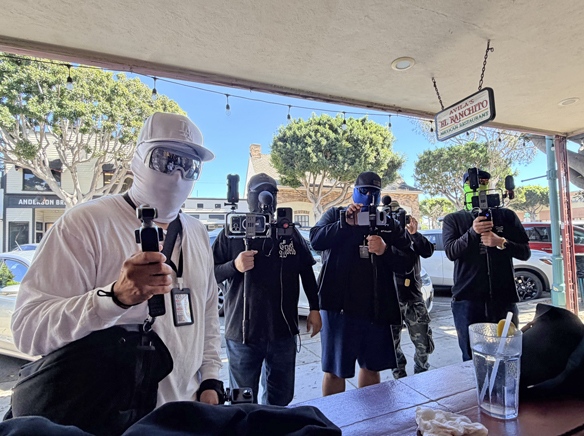
From time to time, we get calls about people standing outside public buildings with cameras, sometimes filming employees, officers, and passersby while asking confrontational questions. Many of these individuals call themselves “First Amendment auditors.” They often claim they are testing whether government employees and police officers will respect the public’s right to record in public places.
At a basic level, that right matters. In a free society, the public generally does have broad protections to photograph and record members of the public or government officials performing their duties. But that does not mean every so-called “audit” is really about accountability. In many cases, it is also about getting a reaction.
And that is the part people should understand. Generally speaking, there is little or no expectation of privacy in public. If you are out on a public sidewalk, in a park, or in another public place, you should assume someone may legally record you. That does not mean people can trespass, threaten others, block entrances, interfere with police activity, or enter restricted areas just because they are holding a camera. But simply filming in public, by itself, is usually not a crime.
So why do they do this? That is not always easy to answer. Some may genuinely believe they are standing up for constitutional rights. Others may be far more interested in attention, confrontation, and internet traffic. What we do know is that calm, uneventful videos generally do not go viral. Conflict does.
That is why some of these individuals try so hard to get under people’s skin. They may insult public employees, bait officers, repeat the same phrases over and over, invade personal space without quite crossing the legal line, or try to provoke members of the public into an argument. They are often looking for the next clip that explodes online. A boring video of someone quietly holding a camera usually gets very little attention. A heated confrontation with police, city staff, or a frustrated resident is much more likely to get clicks, shares, comments, and views. And views can mean money. Many of these videos are posted to social media platforms where high engagement can lead to monetization through advertising revenue, donations, memberships, or similar online income streams. In simple terms, the more dramatic the video, the more attention it can attract. The more attention it attracts, the more valuable it becomes to the person posting it. Whether they are motivated by principle, profit, or both, the smartest thing the public can do is not give them what they came for.
Do not give them the incident. Do not give them the confrontation. Do not give them the viral clip. If you ignore them, they will often get bored and move on.
So how does the Seal Beach Police Department respond? Our response is grounded in constitutional policing, professionalism, and restraint. If someone is lawfully recording in a public place, the presence of a camera alone is generally not enough for enforcement. Officers focus on conduct, not attitude.
What should you do if you encounter one of these situations? The best response is usually the least exciting one.
Stay calm. Keep walking if you can. Do not argue. Do not crowd the person. Do not try to outsmart them on camera. Do not volunteer personal information. And do not let someone else’s attempt to create content turn you into the star of the show.
If you are an employee in a public-facing setting, remain polite, professional, and focused on your work. Follow your agency or workplace procedures. Keep your tone even. A calm response may not feel satisfying in the moment, but it is usually the fastest way to deny them the reaction they are hoping to capture.
Of course, there are times when the line is crossed. If someone is making threats, refusing to leave private property after being lawfully directed to do so, blocking entrances, interfering with emergency activity, or creating a real safety concern, that is different. At that point, the issue is no longer just filming.
The bigger picture is this: the First Amendment is real, and public oversight of government is important. But the public should also understand that not every person with a camera is acting in good faith, and not every “audit” is about principle. Sometimes it is performance. Sometimes it is provocation. Sometimes it is profit.
Seal Beach is a caring community. Part of caring for each other is refusing to help someone manufacture conflict for attention. Calm is not weakness. Professionalism is not surrender. And sometimes the smartest response is simply not giving the camera the show it came for.
Keep your questions coming, Seal Beach! Email us at as*****@*********ca.gov today!